Here's a question that catches most dealers off guard: how many enquiries did your own website send you last month? If the honest answer is "no idea" or "none", you're paying for a billboard in a basement. The site costs you money every month, buyers are looking for exactly what you sell, and somewhere between the two the connection is broken.
The good news: a dealership website that produces zero enquiries is almost never broken in some mysterious way. It's leaking in one of seven specific places, and each one is checkable in minutes. Work down this list in order, because the early ones starve the site of visitors and the later ones waste the visitors it gets.
1. Nobody is arriving at all
Before anything else, separate two very different problems: a site nobody visits, and a site that visitors don't act on. If you have analytics, look at last month's visitor count. If you don't have analytics, that's finding number one, because a site you can't measure can't be fixed, only guessed at.
A site with almost no traffic usually has almost no ways in. No Google Business Profile linking to it, no marketplaces or social pages pointing at it, and no Google ranking for anything a buyer would type. The fix isn't a redesign, it's plumbing: connect the profile, link it from everywhere you already have a presence, and give Google pages worth ranking.
2. It fails the trust check
Remember how buyers actually use a dealership website. 92% of South African car buyers research online before contacting a dealer, and in a market this nervous about scams, the visit is often a background check: they saw your car on a marketplace and they're Googling you before driving out with a deposit. They're looking for signs you're real. Reviews with names. A physical address. Photos of the actual lot, not stock images. A site that looks maintained.
A buyer who fails you on this check doesn't enquire and doesn't complain. They just pick the dealer who looked legitimate. If your site is dated, thin or half-finished, it can be actively costing you the deals you nearly had.
3. It's painful on a phone
The large majority of car-buyer traffic in South Africa is mobile, often on cellular data rather than fibre. Open your own site on your phone, on data, not on the showroom Wi-Fi. Count the seconds. If it takes more than about three, a chunk of your visitors are gone before they see a single car. Huge unoptimised photos are the usual culprit; so are bloated old themes.
4. Your stock isn't on it, or it's stale
A buyer who lands on a dealership website wants one thing: the cars. If the site shows no stock, six cars from March, or a "view our range" page that leads nowhere, the visit is over. Worse, a buyer who phones about a car you sold three weeks ago learns your website can't be trusted, and neither can the next thing you tell them.
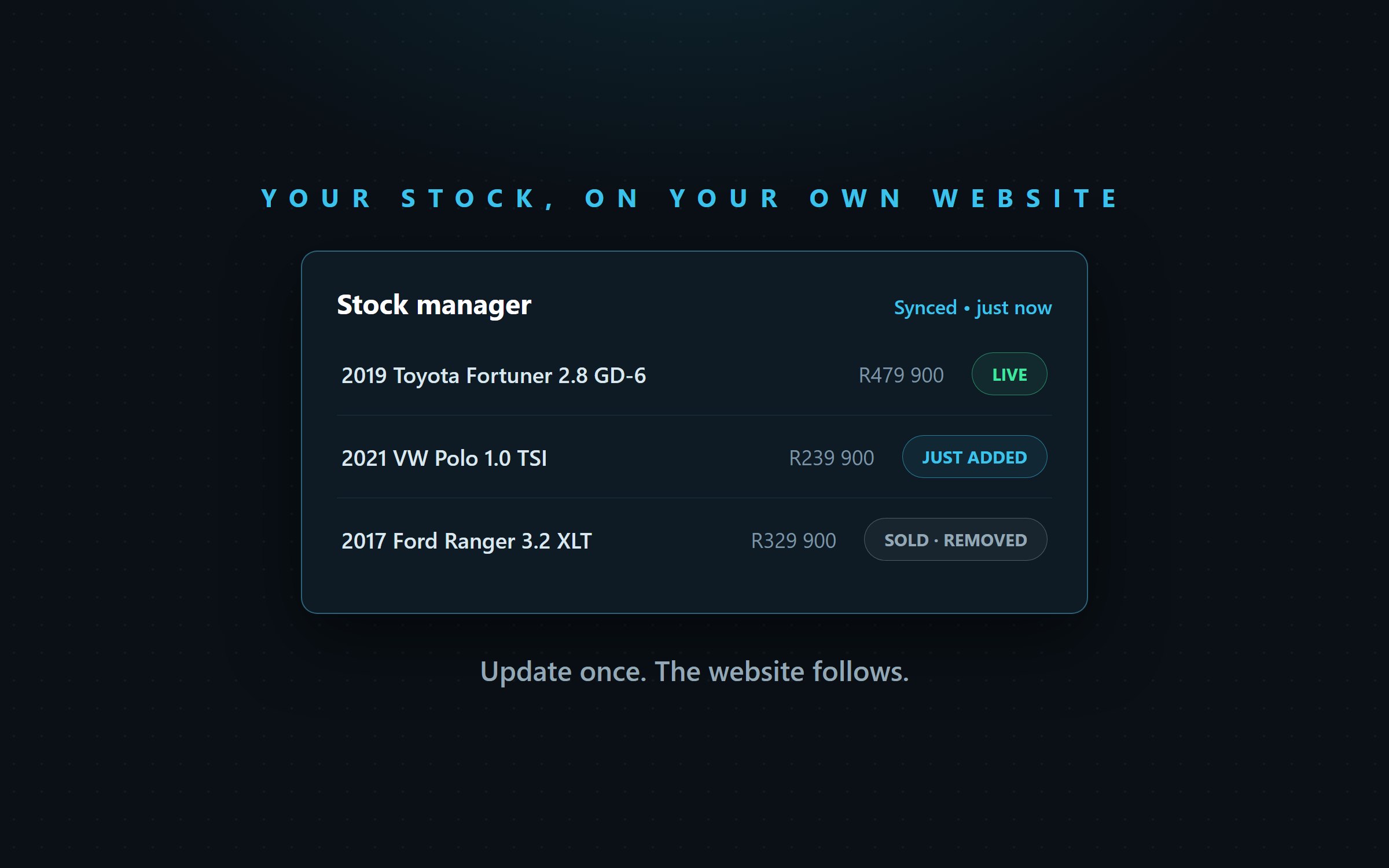
Live stock is non-negotiable, and it has a second benefit most dealers miss: every car is a page Google can rank. We've written up the options in how to manage your car stock on your own website.
5. Enquiring takes too much effort
Now assume the buyer likes a car. What do they have to do next? If the answer is "find the contact page, fill in a form with seven fields, and hope", you're losing them. South African buyers live on WhatsApp. A one-tap "I'm interested in this car" button on every vehicle page, that opens a conversation with the car already referenced, converts several times better than a generic form, because it takes five seconds on the phone they're already holding.
Each car page needs its own enquiry path, tied to that car. A single contact form for the whole site forces the buyer to do the admin, and buyers don't do admin.
6. The enquiries exist, but nobody sees them
This one stings because the website is actually working. Enquiries fire into an info@ inbox that nobody opens, or a form plugin that silently broke two years ago, and from the showroom floor it looks identical to "the website doesn't work". Send yourself a test enquiry right now and time how long it takes anyone to react. The average dealership takes around 42 hours to respond, and 78% of buyers purchase from whoever responds first. An enquiry answered on Thursday is a car sold by someone else on Tuesday night.
Every enquiry should land somewhere someone actually watches, ideally WhatsApp, and be logged against the car it came from so nothing slips.
7. You can't see any of the above
The thread through all of this: without measurement, every one of these leaks looks the same from the outside, "the website doesn't work". With basic tracking, a visitor count, an enquiry log, a source on every lead, the diagnosis takes minutes. That's the difference between a site you own and a site you hope about, and it's why we build lead logging into every dealership website we ship.
The five-minute self-test
- Google your dealership name. Does your site appear, with a healthy business profile beside it?
- Open the site on your phone, on data. Count seconds until you see cars.
- Check the stock. Is it live, current and priced?
- Try to enquire about one car. Count the taps.
- Send a test enquiry. Time how long until a human sees it.
Want the diagnosis done for you? That's exactly what the free audit is: we go through your site and lead flow, find where buyers are slipping away, and show you what plugging it is worth on your own numbers, in a short video you can watch in minutes.
A dealership website that gets no enquiries isn't bad luck, it's a specific leak with a specific fix. Book the free audit and we'll point at it.